Where Partner Activation Workflow Breaks Down: Fixing the Campaign Handoff

Most partner campaigns don’t fail because the strategy was bad. They fail because the momentum gets lost in the "in-between."
You publish a campaign, but the partner gets stuck. They launch, but you can’t see what happens next. A lead engages, but sales gets a notification with zero context, zero urgency, and zero guidance. It’s a mess of spreadsheet gymnastics and best-guess marketing.
You don’t need more assets in a folder. You need an operating model.
You need to see the motion, make the launch effortless, and turn every signal into a clear next step. For IT vendors and distributors, that’s the difference between hoping partners take action and building a repeatable path from partner activity to pipeline.
Why Your Handoffs Are Broken
The problem is your operating model, or lack of one. Right now, most organizations treat every stage of the partner lifecycle like a silo. Marketing drops a link in a portal, and everyone assumes the partner will figure out the rest. It’s disconnected, it’s frustrating, and it makes it harder to turn partner activity into measurable results.

If your current process looks like this, you’re losing ground:
You publish; they guess. You provide content, but not the context of why it works or how to use it.
Progress is a black box. You’re waiting for a report instead of having a clear view of partner activity and campaign engagement.
Data is scattered. Your insights live in silos that nobody actually reads, let alone acts on.
Sales is flying blind. They get alerts, but without partner or campaign context, they’re just cold-calling warm leads.
A real activation workflow fixes these gaps by connecting what happens between campaign handoff and sales follow-up. It gives your team visibility into what’s moving, makes it easier for partners to launch, and gives every signal the context needed to act.
Visibility Is Your Baseline
If you can’t see it, you can’t fix it. Many channel leaders confuse "content access" with "visibility." They are not the same thing. Knowing that partners have access to a campaign doesn’t tell you whether they’re actually doing anything with it.
You need a clear view of partner activity, campaign engagement, leads, and program participation. Which partners are active? Which campaigns are generating engagement? Where does follow-up need to happen?
That’s the difference between reporting on what happened and knowing what to do next. Visibility should help your team spot where momentum is slowing down and decide where attention is actually needed.

Remove the Friction From the Launch Path
Every choice you force a partner to make is another chance for the campaign to stall. If they have to adapt the message, figure out the audience, build the campaign, and plan the follow-up themselves, you’re asking them to do a lot before anything ever gets launched.
Don’t just give them a library of choices. Give them a path.
Make the audience clear. Give them campaign-ready resources. Spell out the recommended action. Build a workflow that makes it easier to go from "Here’s the content" to "The campaign is live."
The goal isn’t to give partners more stuff, but to remove the friction between having the resources and actually using them.
Give Every Signal Context
A "lead generated" notification without context is useless. It’s just noise that your sales team will eventually learn to ignore.
A useful signal tells your team what happened, which partner and campaign it came from, and who owns the next move. That context is what turns an alert into something your team can actually act on.
When the signal reaches the right person with enough context to make a decision, you stop babysitting the process and start coordinating it.

How GlassHive Connects the Partner Activation Workflow
GlassHive isn’t another place to dump files and hope partners use them. It connects campaign execution, partner activity, and sales follow-up so the workflow doesn’t fall apart between steps.
Partners get a clearer path to launch. Channel teams get visibility into what’s happening. Sales gets the context to know when, and why, to follow up.
Less chasing. Less guessing. More coordinated action.
Start With One Workflow
Don’t try to redesign your entire partner program in a weekend. Pick one campaign and map the journey from start to finish.
Where does the partner usually get stuck? Where does your team have to chase an update? Where does a useful signal get handed off without enough context?
Pick one of those gaps and fix it. Define what should happen, who owns it, and what information they need to keep things moving.
That’s how you build a repeatable operating model: one workflow at a time.

The Takeaway
Partner activation doesn’t break because you need another campaign asset. It breaks in the gaps between making something available, getting it launched, seeing what happens, and knowing who should act next.
Fix those handoffs and you stop managing partner marketing through reminders, spreadsheets, and guesswork. You start building a workflow your partners and your team can actually follow.
The first step is figuring out where your current workflow is breaking down.

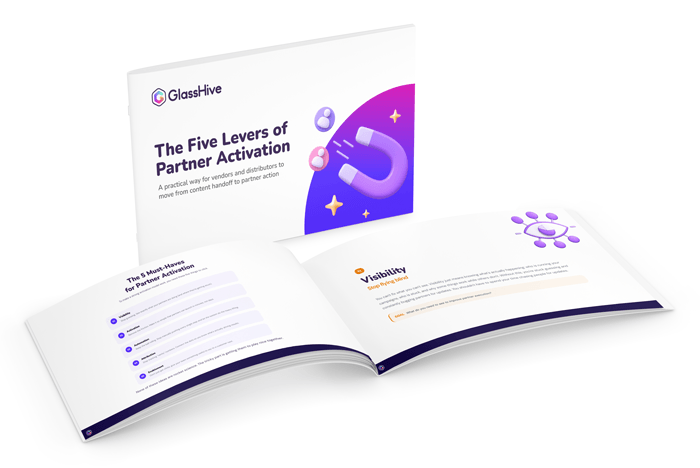
Explore the Five Levers behind a stronger partner activation workflow: